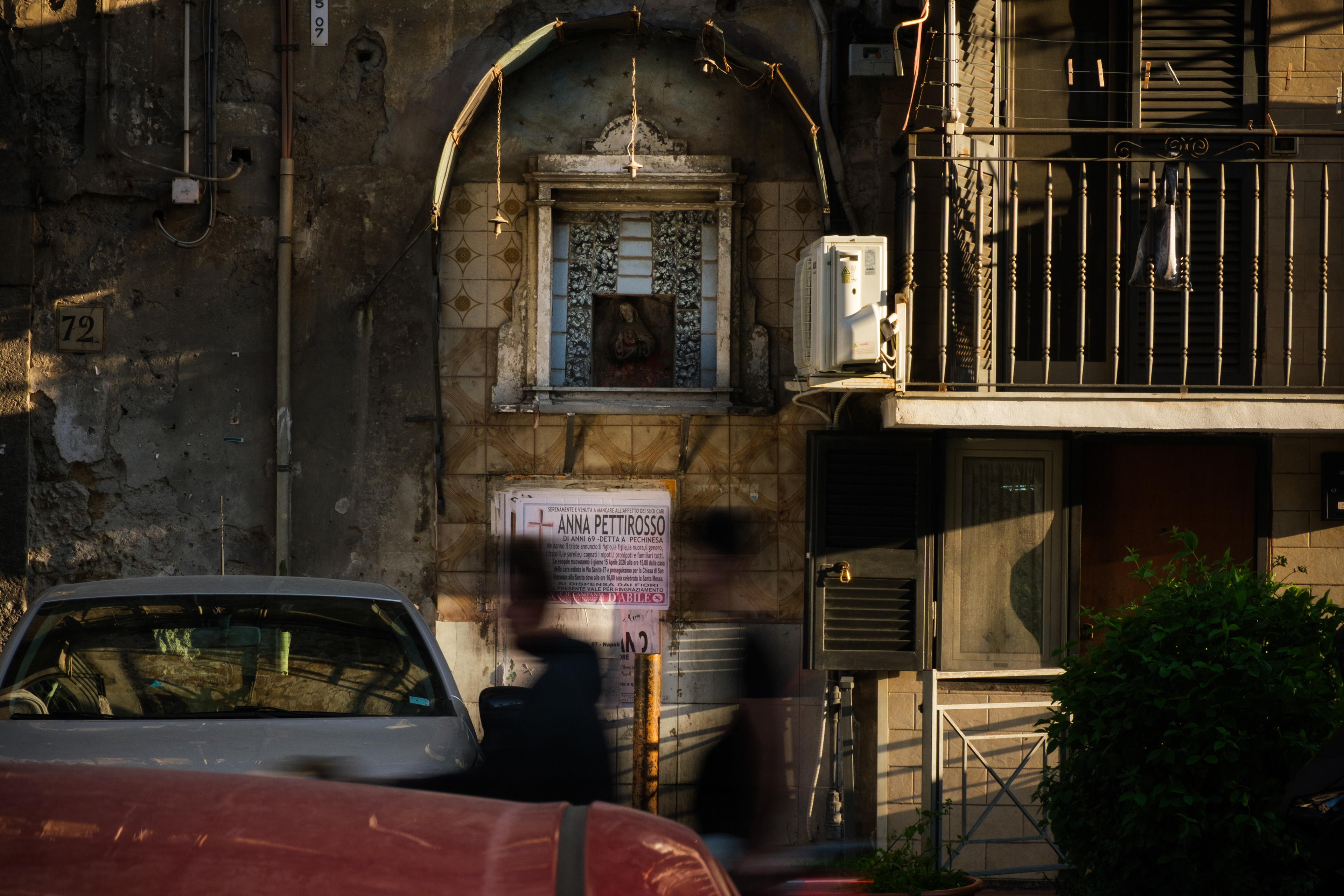
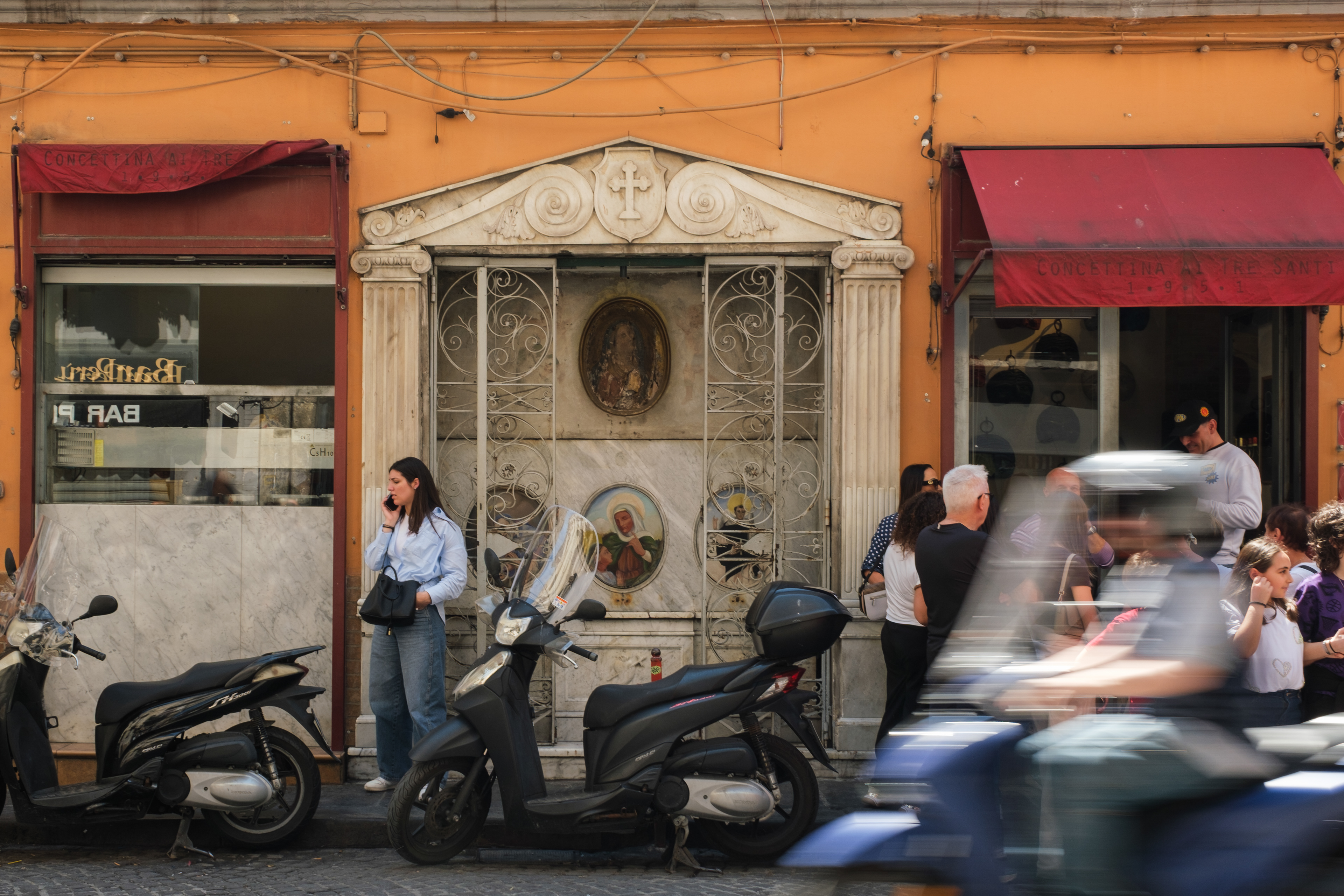
The visual documentation focused on capturing this intricate architectural and social fabric. The imagery records how illuminated street altars, funeral posters, and edicole votive are embedded directly into stone walls, sharing physical space with local storefronts, window-to-window conversations, and the natural flow of daily life.
Capturing this environment required an intimate yet observational approach to highlight how collective memory functions as a visible extension of domestic life. The project documents specific, personal acts of devotion, such as resident Vincenzo Ziccardi’s transformation of a former Catholic workers' association chapel into a local sanctuary, illustrating how portraits of the deceased become an integral part of the community-building landscape.
Throughout the series, the visual direction prioritised a sensitive exploration of grief and memory. By capturing a visual ecosystem where family intimacy overflows naturally into the public street, the project ultimately poses a poignant question: in an era when grief is increasingly pushed out of public life, what does it mean for a community to continue living alongside its dead?
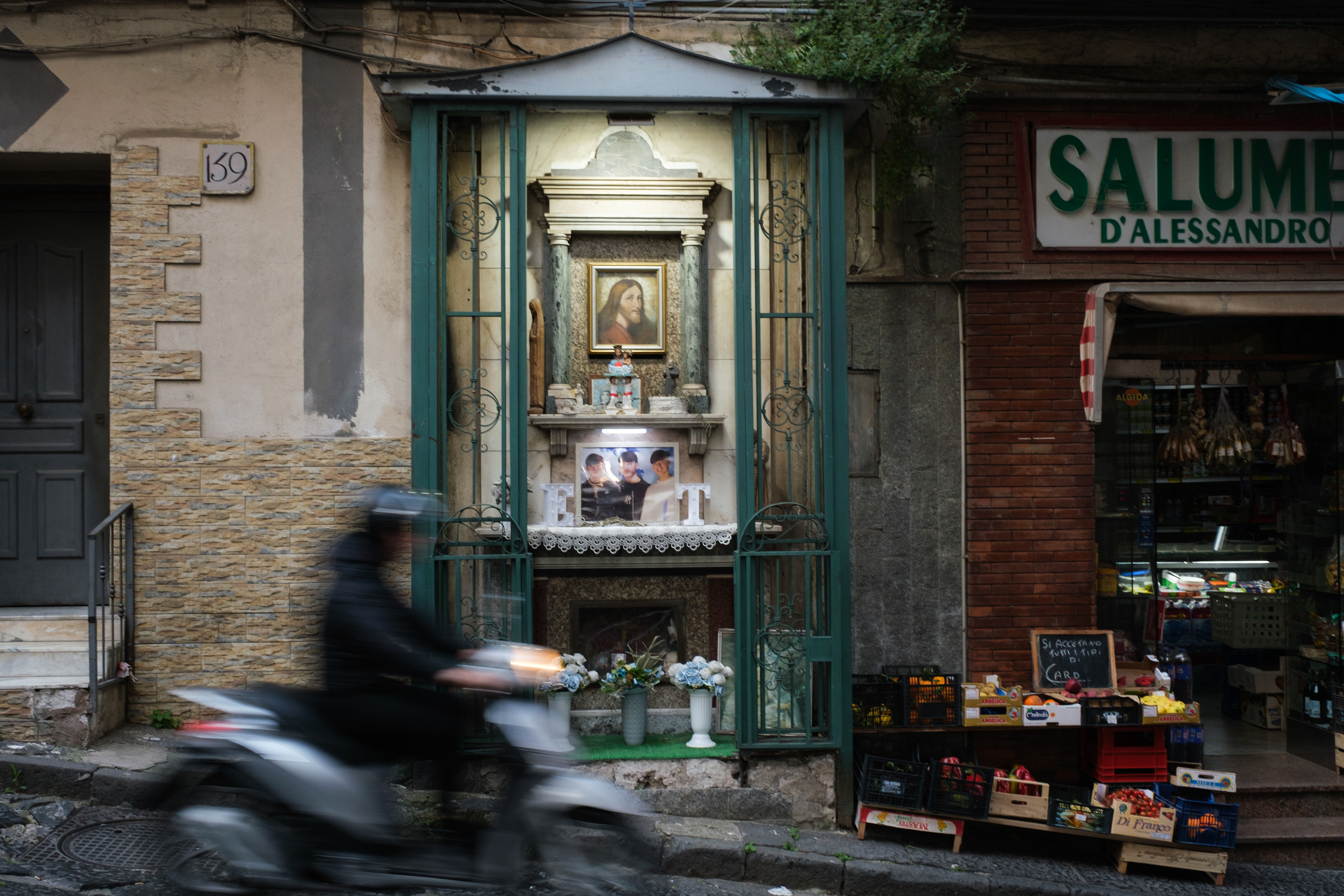
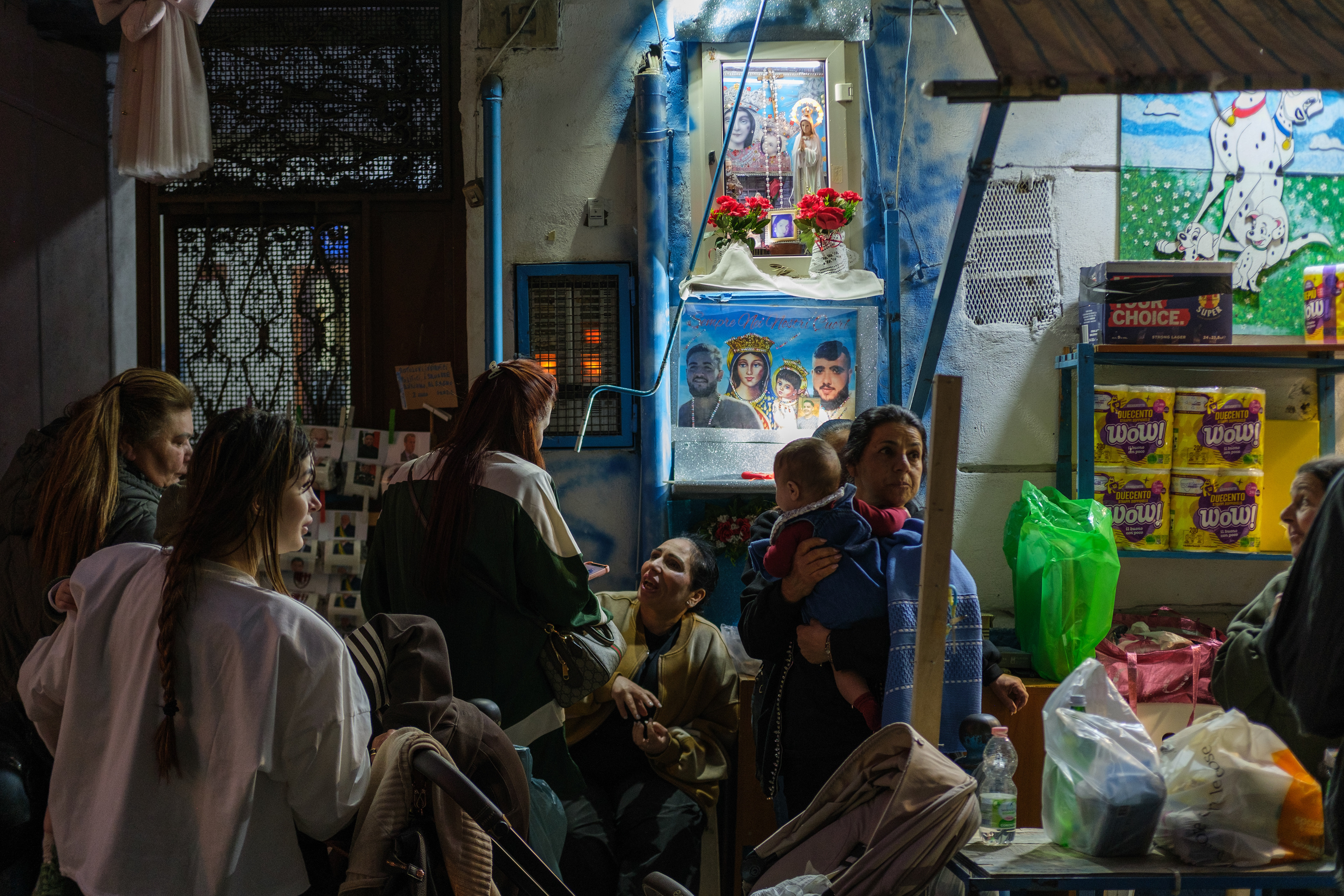
Naples (Italy): Residents gather on a neighborhood street in the Rione Sanità district, next to an illuminated edicola votiva (street shrine) decorated with flowers and photographs.
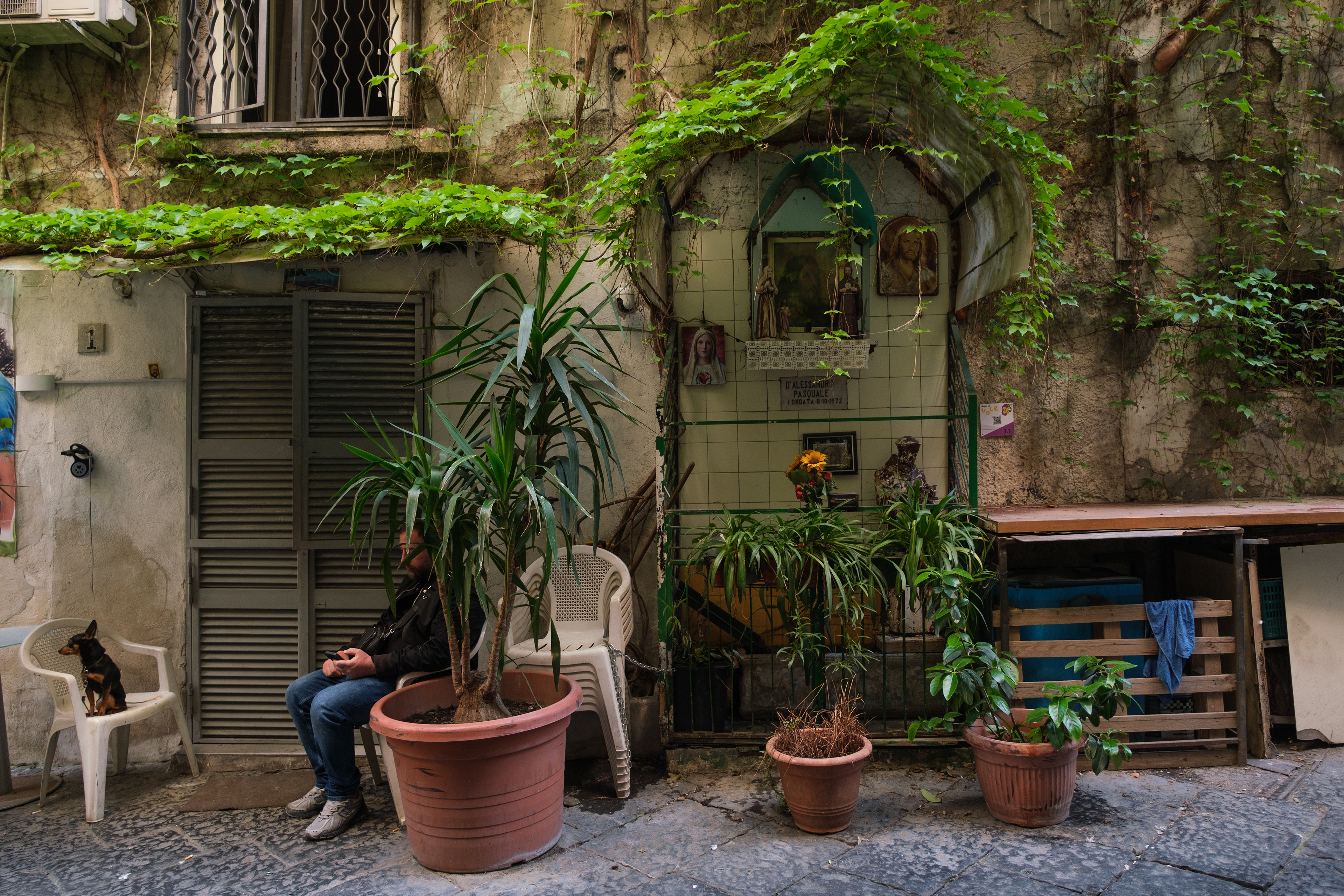
Naples (Italy): A man and his dog are seated next to an “Edicola Voltiva” or “Altarino” , a roadside altar built in memory of the deceased. These traditional street shrines seamlessly merge sacred Catholic iconography with framed photographs and personal mementoes of the departed.
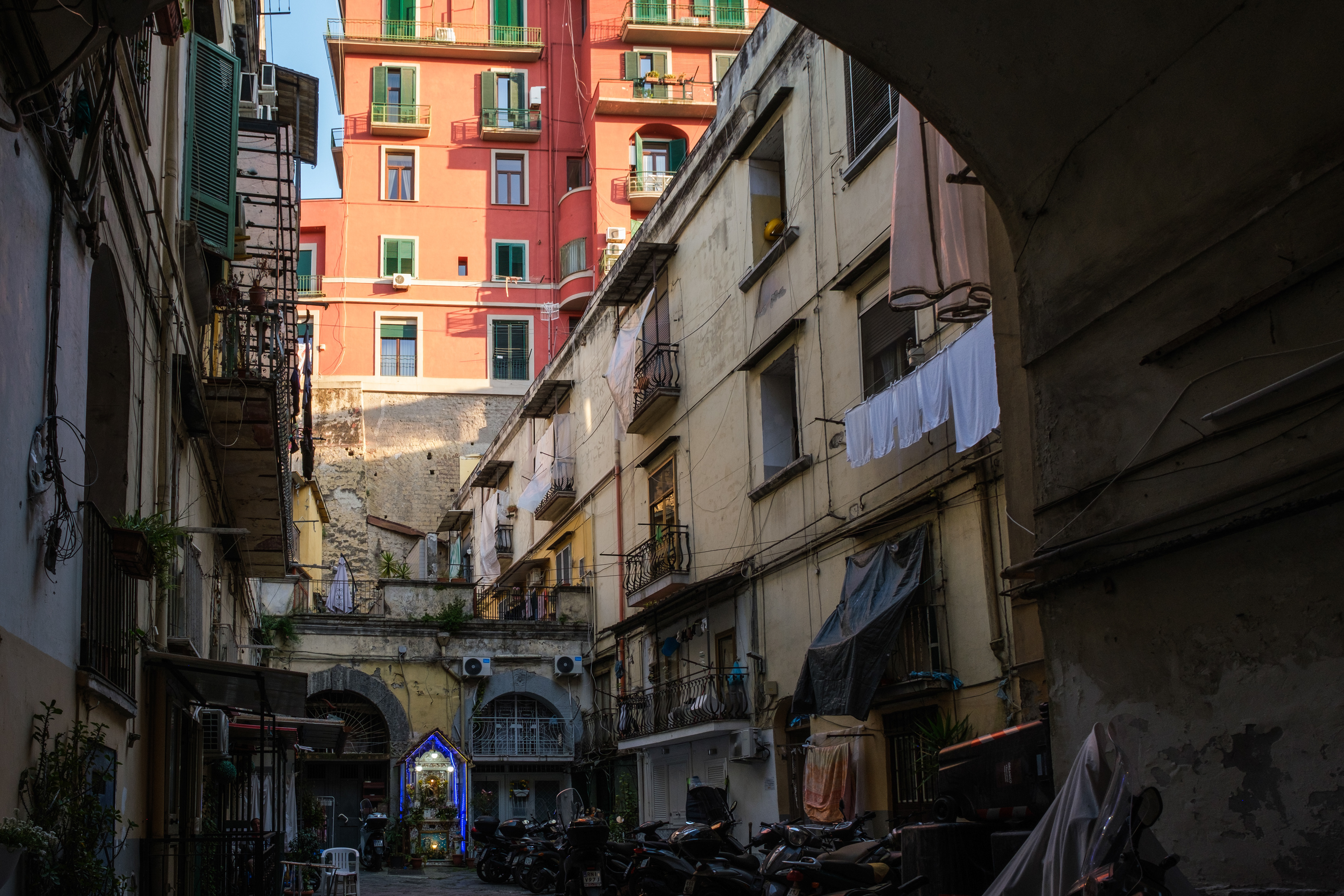
Naples (Italy): A view of a narrow residential courtyard in the Rione Sanità district, featuring hanging laundry, parked motor scooters, and a brightly lit blue neon edicola votiva (street shrine) at the far end.
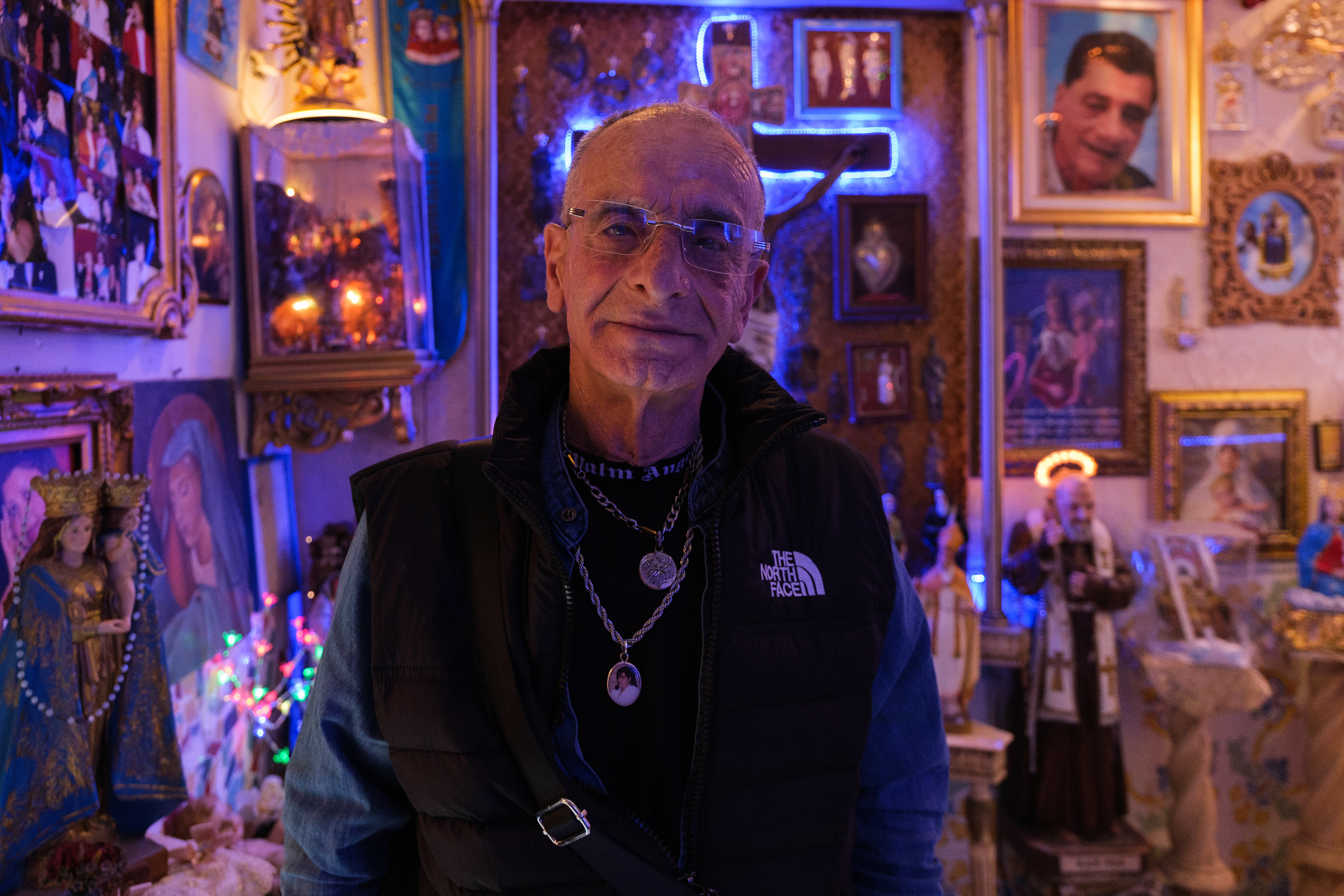
Naples (Italy): Resident Vincenzo Ziccardi stands inside the street chapel he transformed in the Rione Sanità district. Originally dedicated to his late wife, Maria, the sanctuary evolved into a shared community shrine honouring other deceased neighborhood residents.
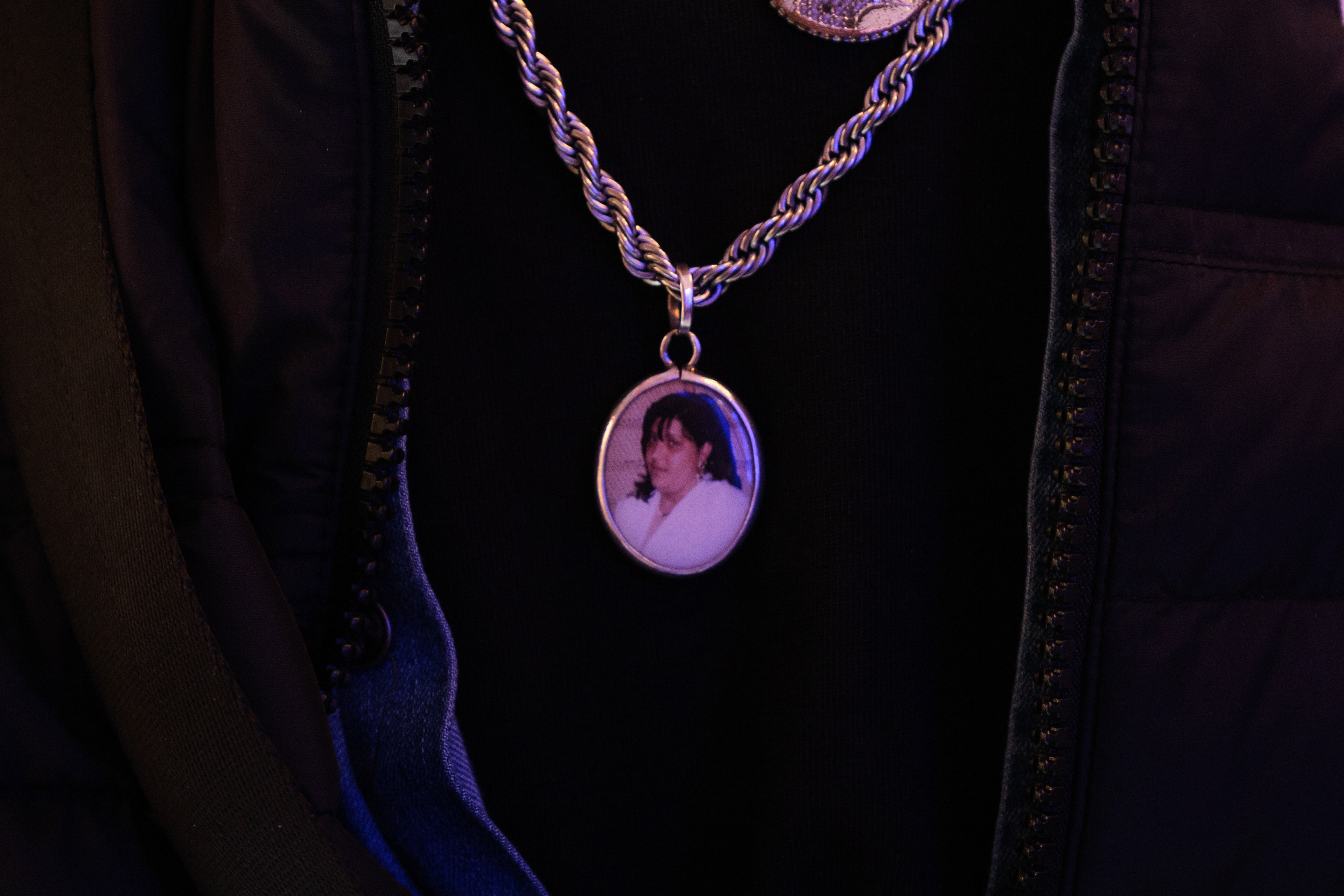
Naples (Italy): A close-up of a pendant worn by local resident Vincenzo Ziccardi, featuring a portrait of his late wife, Maria. Her passing inspired him to transform a small sanctuary that eventually grew into a collective memorial for the Rione Sanità neighborhood.
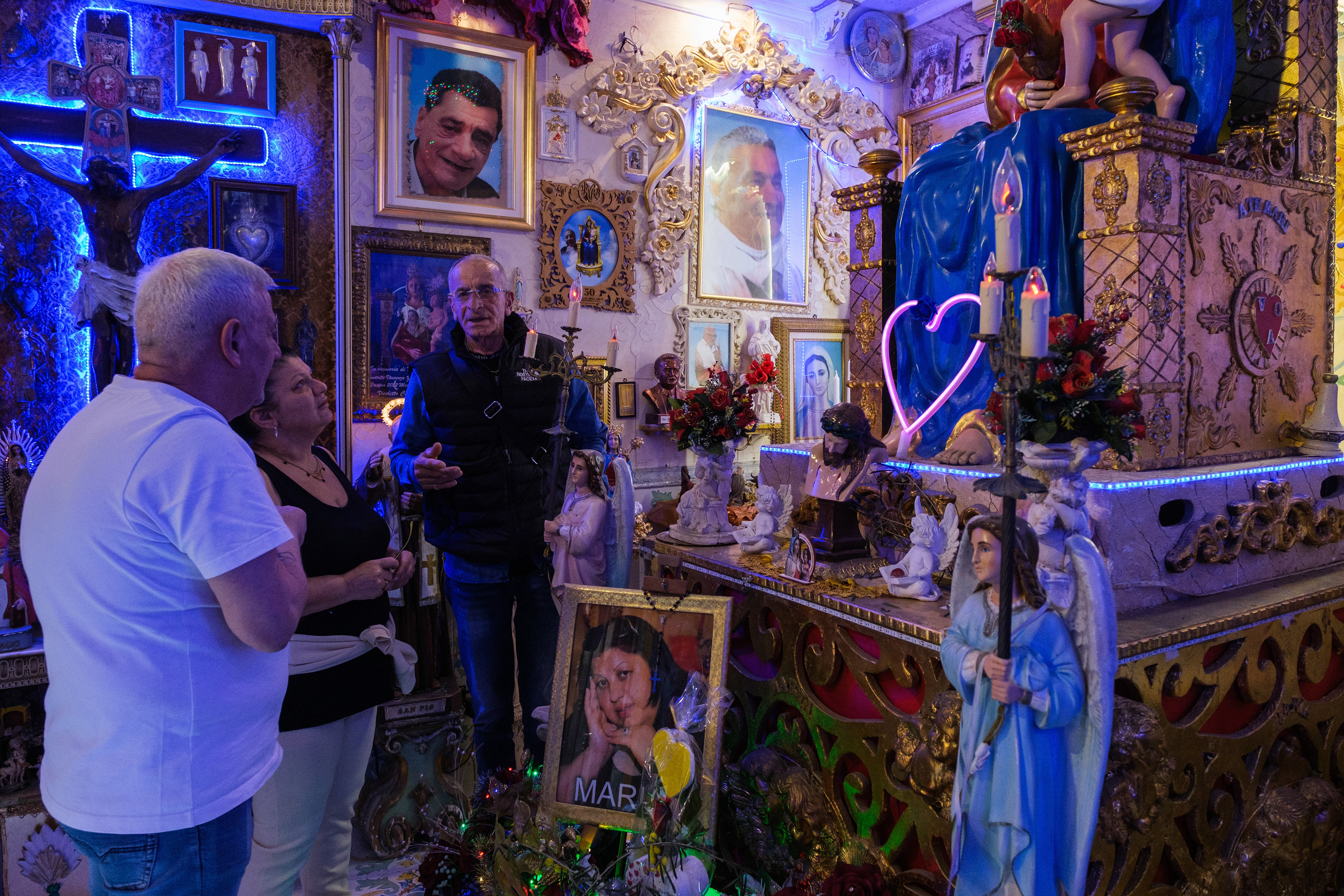
Naples (Italy): The interior of the community chapel in the Rione Sanità district, densely packed with framed photographs of various deceased locals. Started by Vincenzo for his wife Maria, the sanctuary expanded organically as neighbors added their own family portraits, banners, and votive offerings.
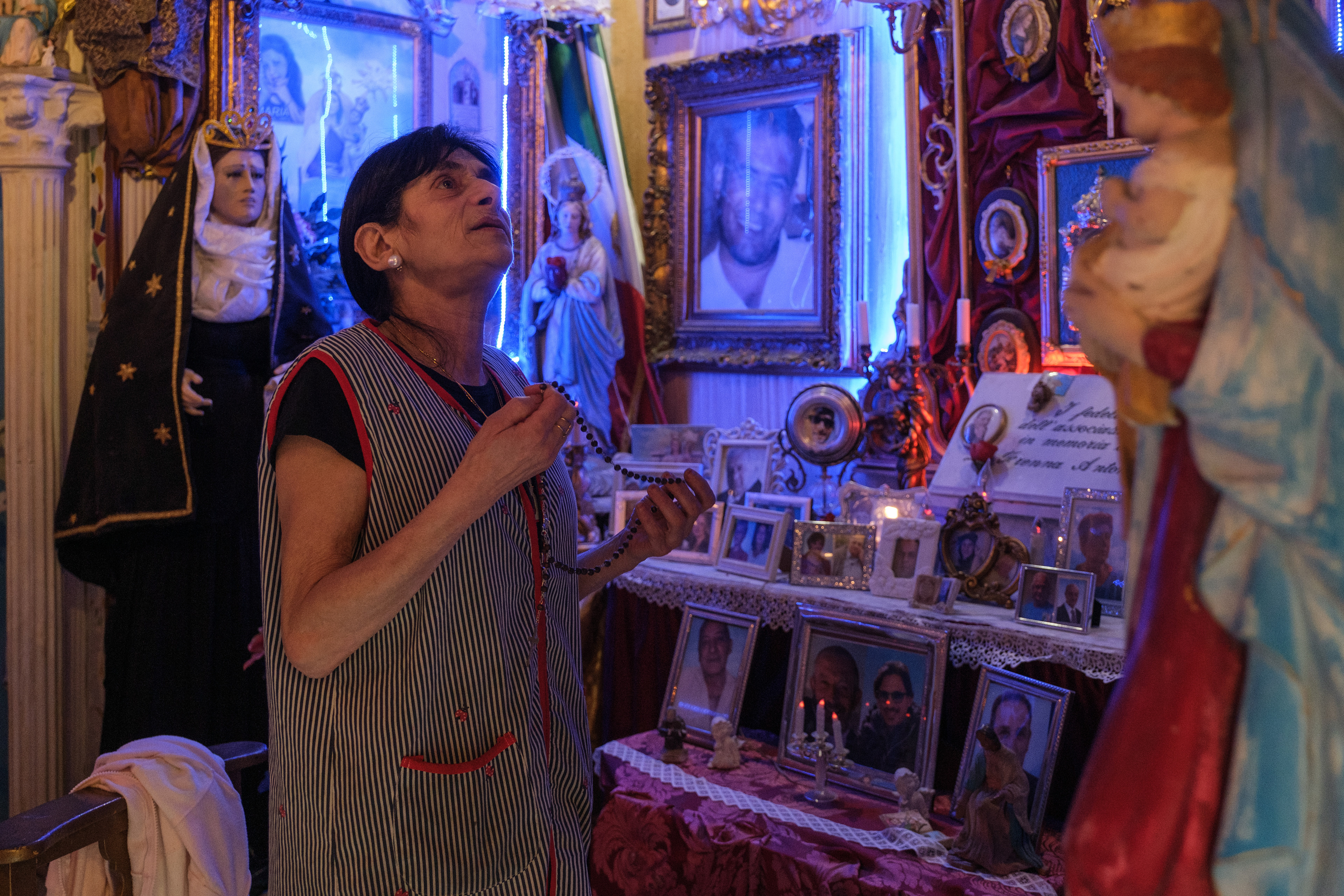
Naples (Italy): Vincenzo’s sister, Amalia Ziccardi, holds a rosary and prays for her late sister, Anna, inside the community chapel in the Rione Sanità district.
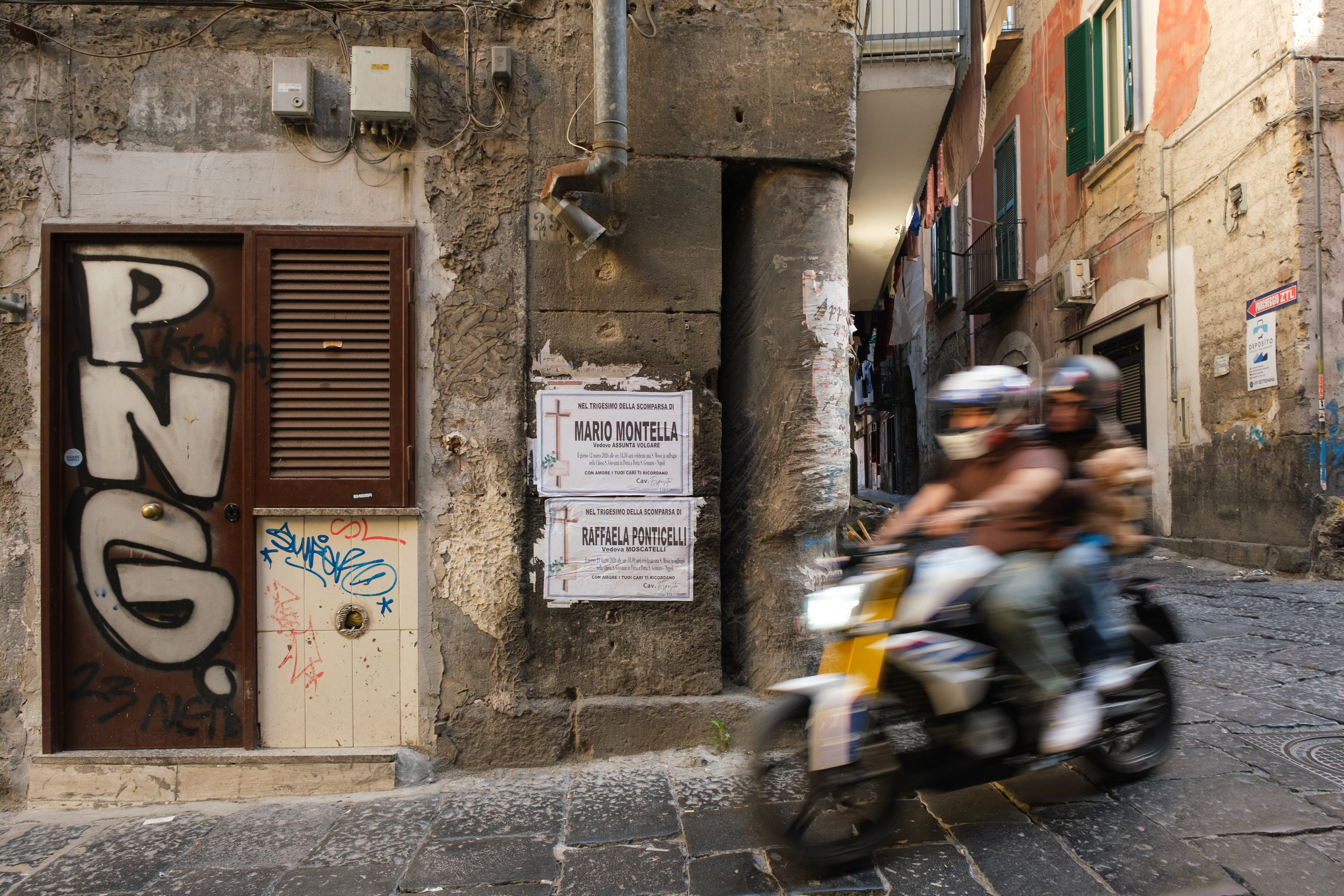
Naples (Italy): A motorcycle passes in motion blur next to a weathered stone wall displaying death notice posters in a narrow street of the Rione Sanità district.
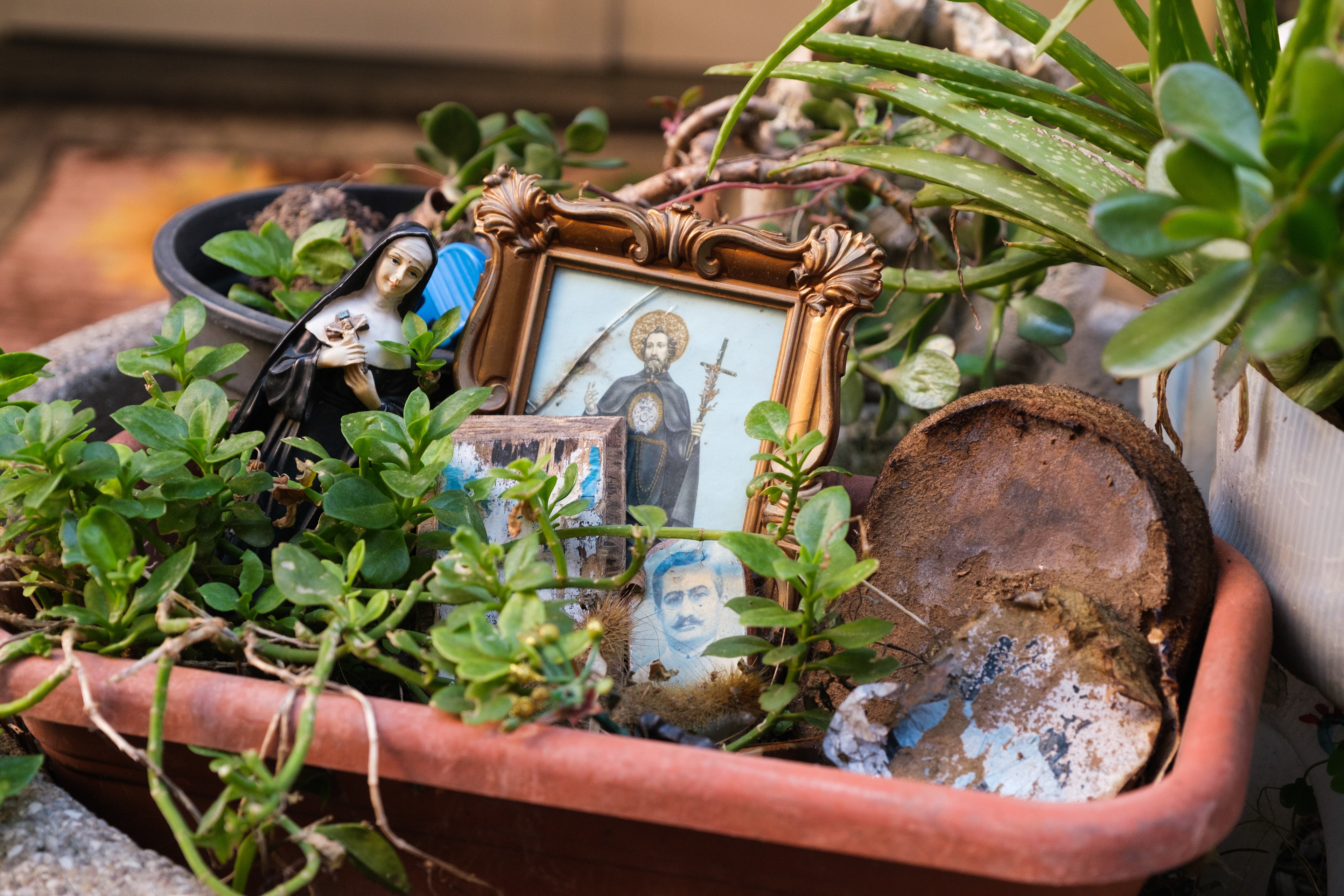
Naples (Italy): A close-up of an informal street shrine arranged inside a plastic planter in the Rione Sanità district. The small memorial contains a figurine of a nun, a cracked gold frame depicting a Catholic saint, and a photograph of a deceased man nestled among the plants.
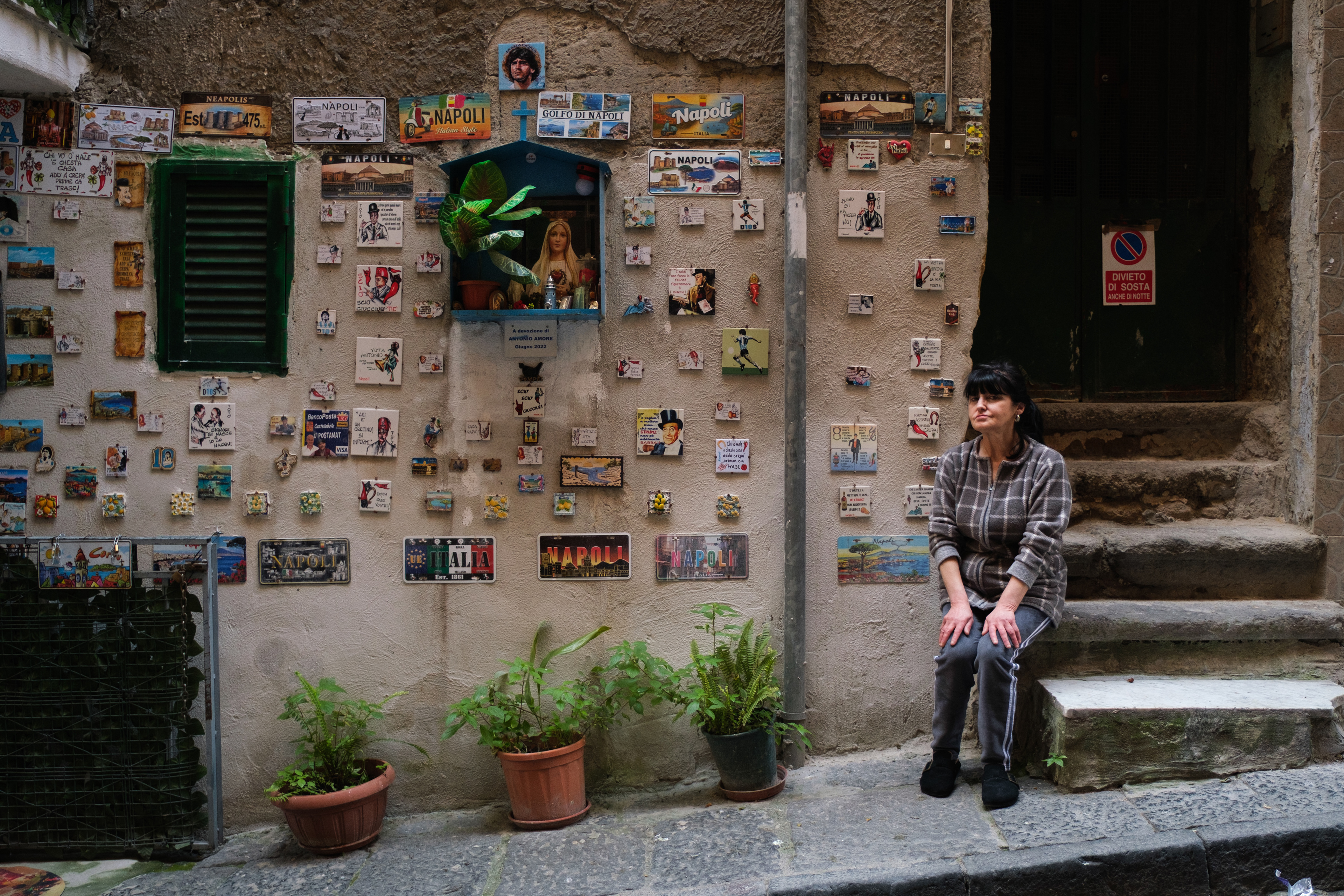
Naples (Italy): Nuncia Amore sits on stone steps next to a street shrine built in memory of her late brother, Antonio Amore, in the Rione Sanità district. The wall features a decorative mural of tiles assembled by Antonio during his lifetime.
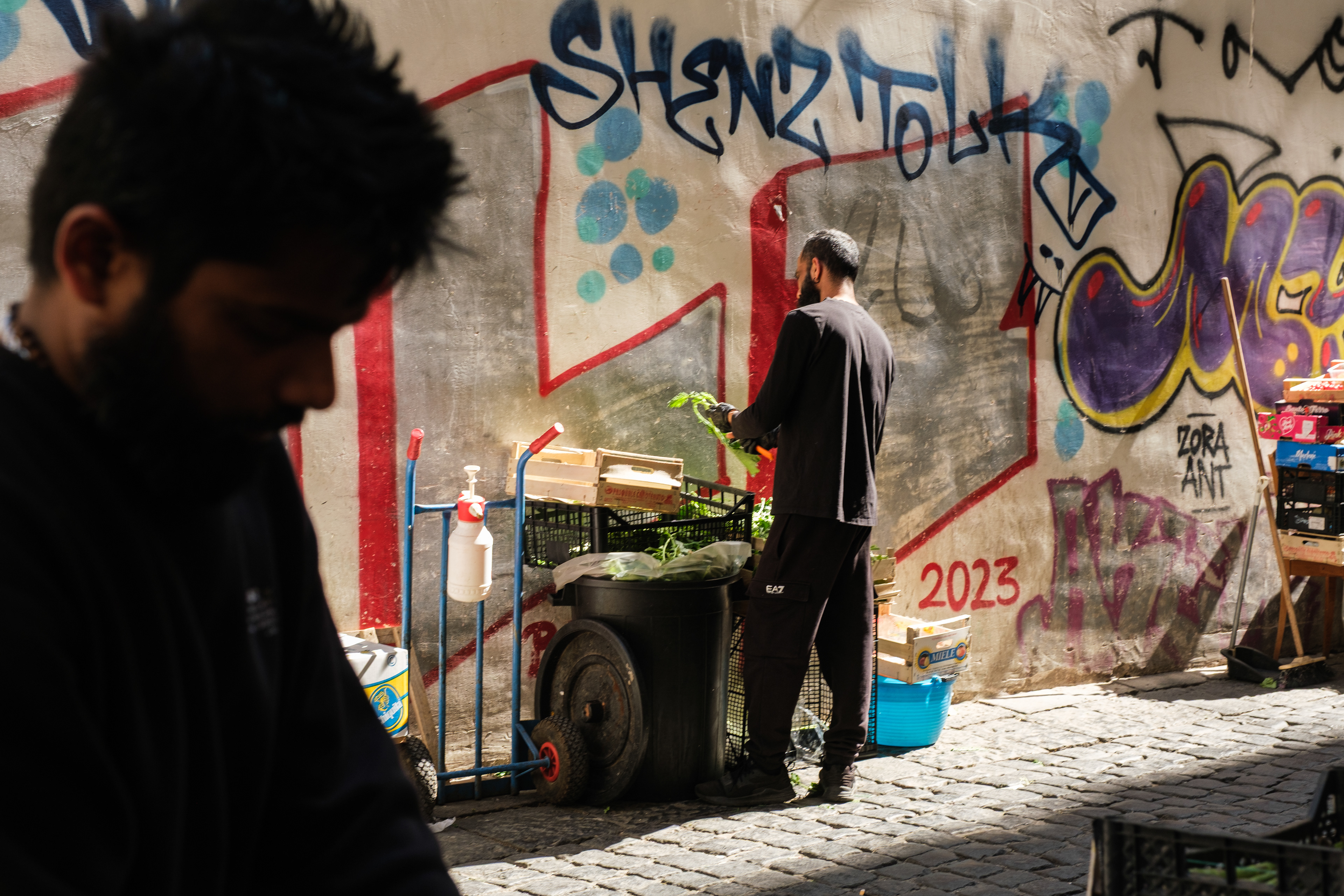
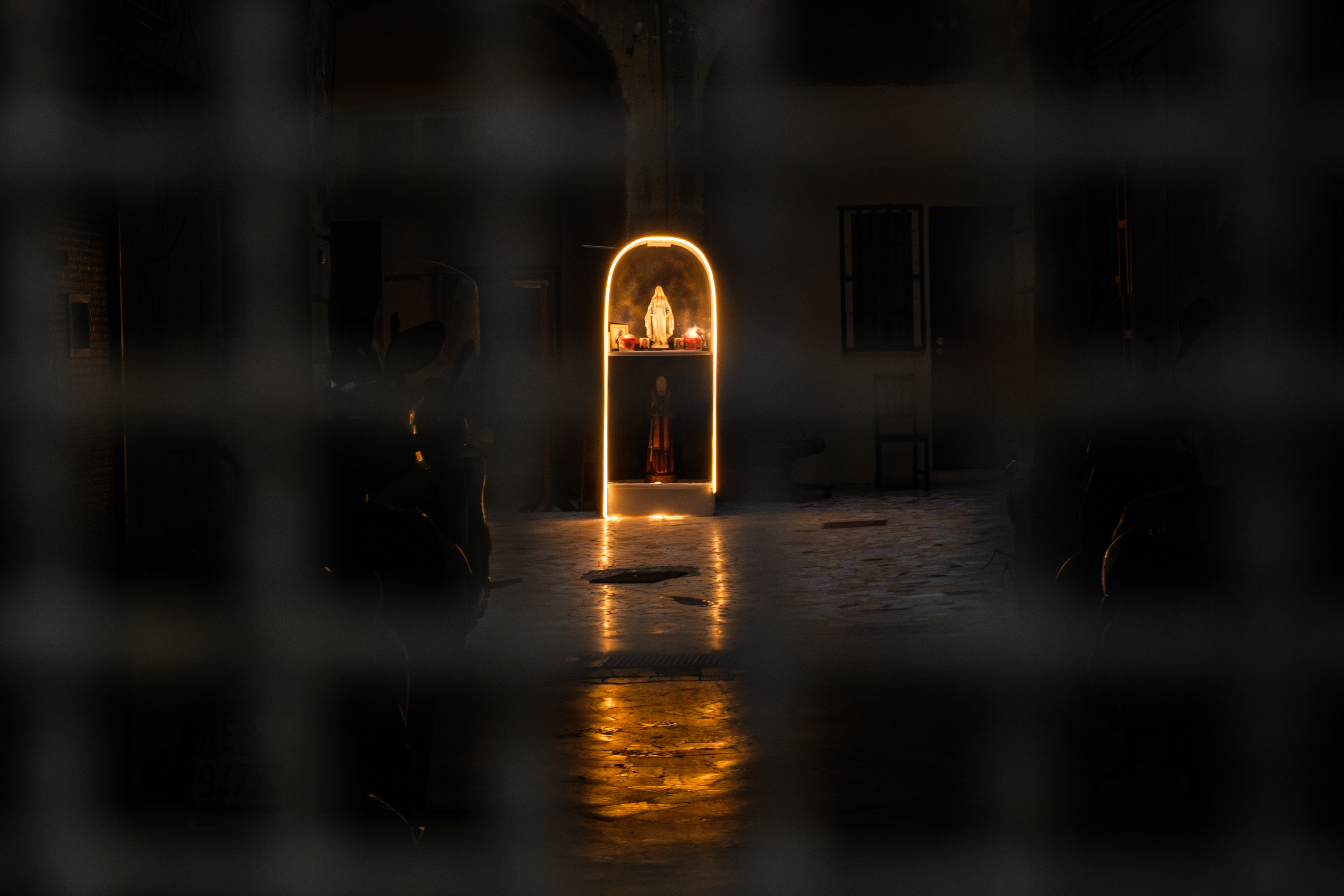

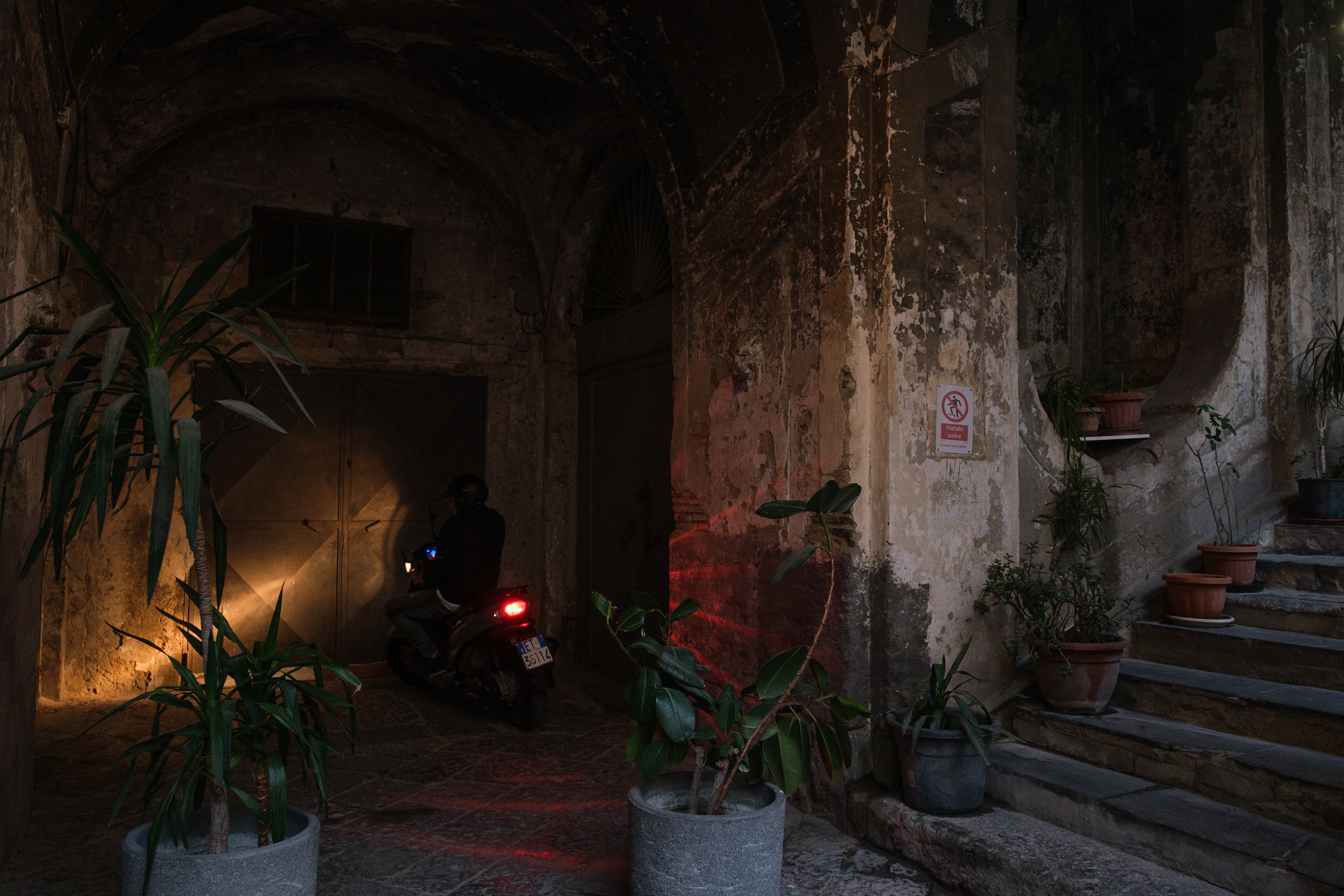
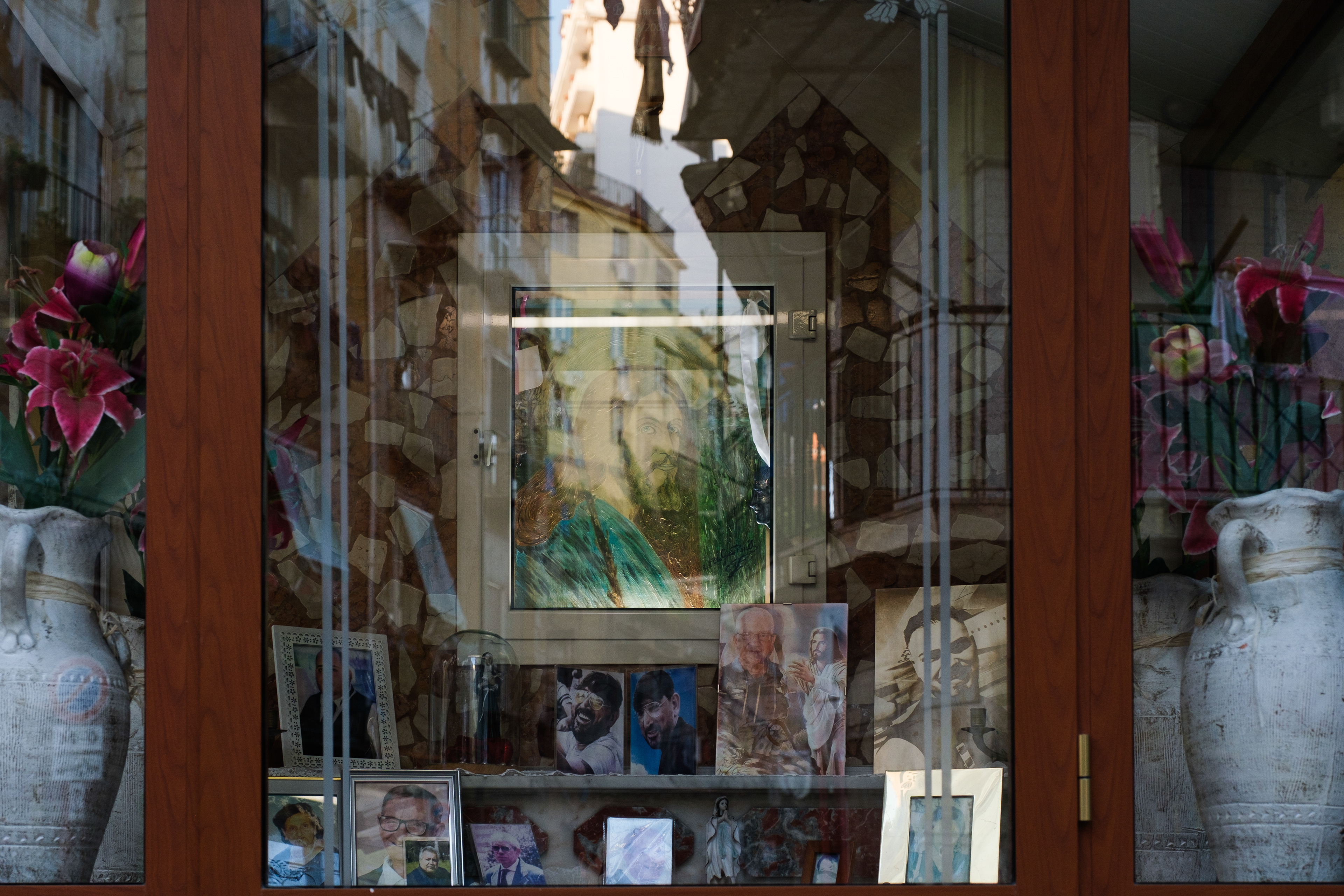
Naples (Italy): A street-facing window display houses a memorial altar with framed portraits of the deceased in the Rione Sanità district, with the glass reflection visually merging the interior shrine with the surrounding city architecture.
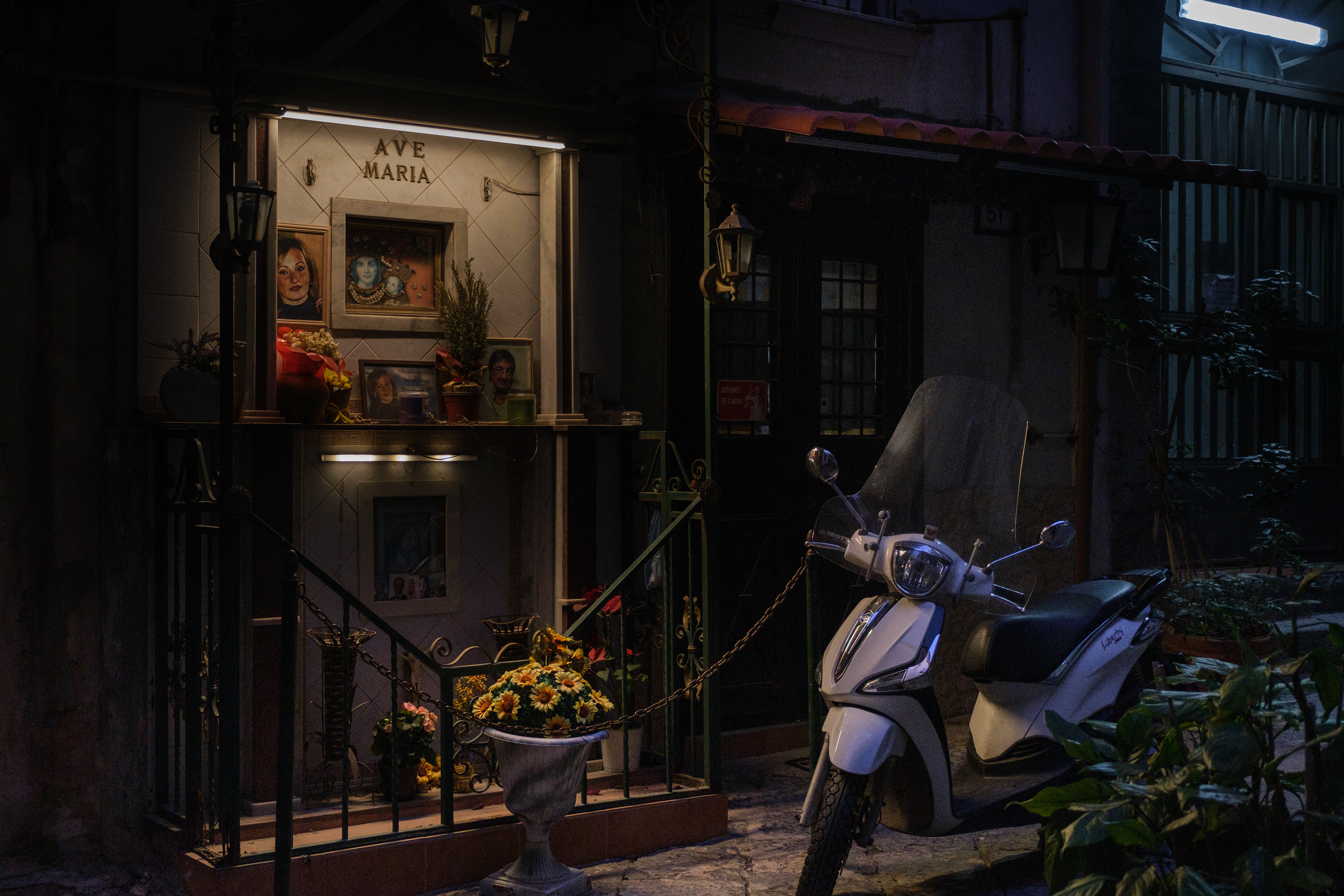
Naples (Italy): A street shrine inscribed with "A VE MARIA" is illuminated at night in the Rione Sanità district, featuring framed portraits of the deceased and floral arrangements next to a parked motor scooter.